Problem Advisory
The surrounding conditions of a horse-related difficulty are examined through environment, feeding, daily life, behaviour, relationships, and observation.
Explore Problem Advisory Inquire
Private Equine Relationship Advisory
A private, observation-led approach to horse-related difficulties, the design of a shared life and communication beyond training.
Explore your horse’s observable reactions, environment, daily rhythm, relationships and choices—whether you ride, keep horses at pasture or are considering a different way of living together.
Where are you now
A private choice, made here in your browser. Select the situation closest to yours — nothing is stored or sent.
What We Provide
Equine Notion offers three connected forms of private work for people who want to understand their horse, reconsider their shared life, or examine a difficulty that has remained unresolved.
The surrounding conditions of a horse-related difficulty are examined through environment, feeding, daily life, behaviour, relationships, and observation.
Explore Problem AdvisoryA long-term way of living with a horse is considered through land, environment, daily rhythm, distance, rest, movement, and relationship.
Explore Coexistence DesignLearn how horses communicate and how your own presence, voice, distance, boundaries and timing become part of the exchange.
Explore Equine DialogueSHORT-TERM SUPPORT
A private written chat for situations that need structured support before a full report can be completed. Netherlands only. English only. Not an emergency service.
View Priority Situation Chat →AS FEATURED IN
Observed in daily life
Six real cases from our life with horses. Not demonstrations or borrowed methods, but changes and relationships we observed directly.
 01
01Relationship · TINNA
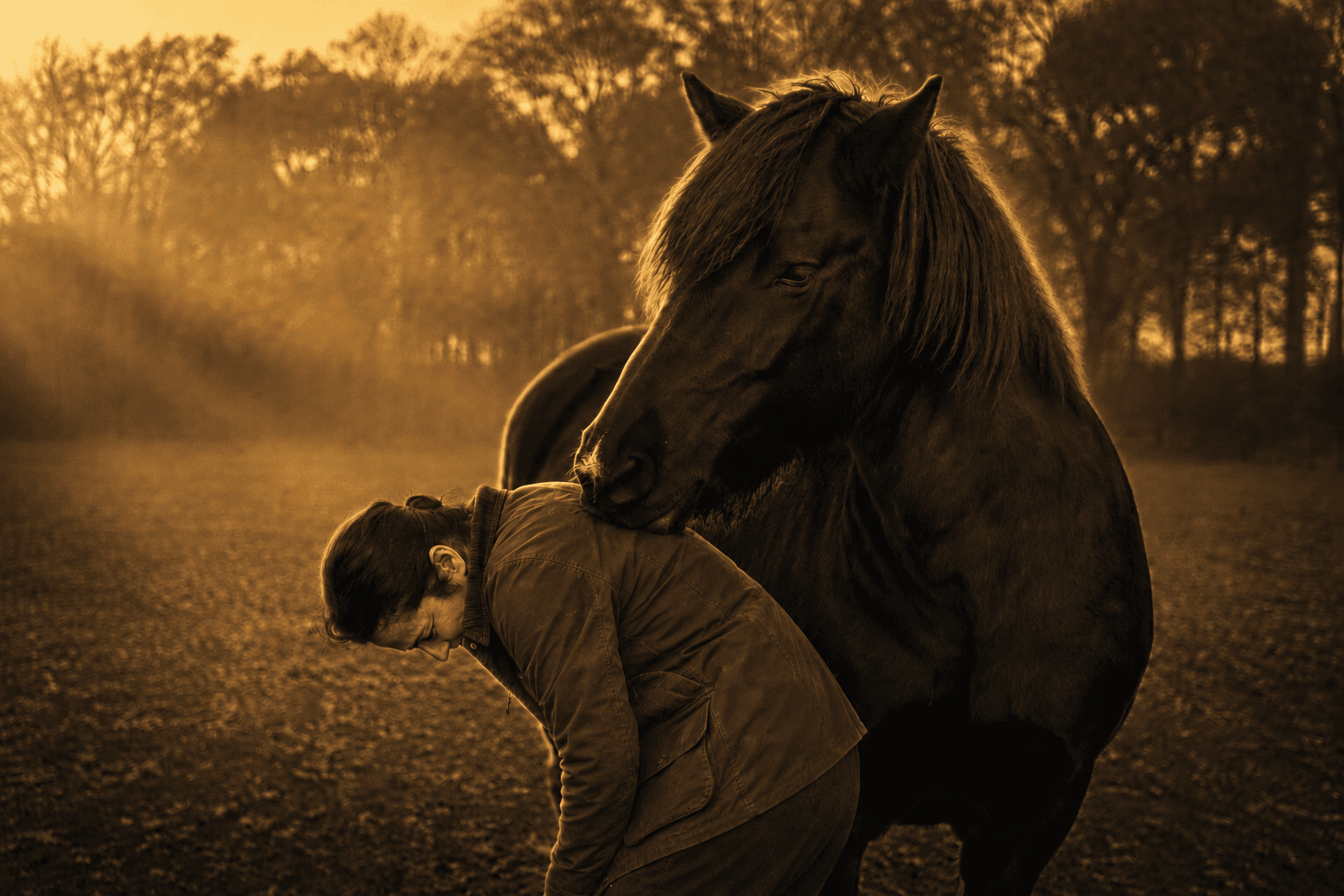
TINNA was never taught to groom a person. She approached me and began it herself. At first she scratched with the strength she used with other horses.
As she came to know my body, TINNA adjusted the strength of her touch herself.
When a horse wants to be groomed, we observe that she approaches another horse and begins grooming first. The other horse may then respond. The exchange begins with the horse's own choice of partner, timing and contact.
Many online videos show a person scratching an itchy place and placing an arm in front of the horse's mouth. When the horse tries to scratch strongly, the arm is quickly withdrawn. The reaction has been prompted, while the horse's own way of responding is not accepted.
TINNA was not prompted in this way. I did not place my arm at her mouth or teach her to groom me. She approached and initiated the contact herself.
At first, TINNA did not know the difference between a horse's body and a human body. She scratched me as strongly as she would scratch another horse. I did not classify her attempt as aggression and end the exchange.
Over time, as TINNA learned my body and responses, her touch changed. She began to use a strength that did not hurt me. I did not train that adjustment or punish the earlier force; it emerged within the relationship.
Brushing is different from the grooming described here. Brushing is care performed by a human on a horse. This case concerns reciprocal grooming initiated by the horse.
Does your horse approach you and begin grooming—or do you approach the horse and simply scratch an itchy place?
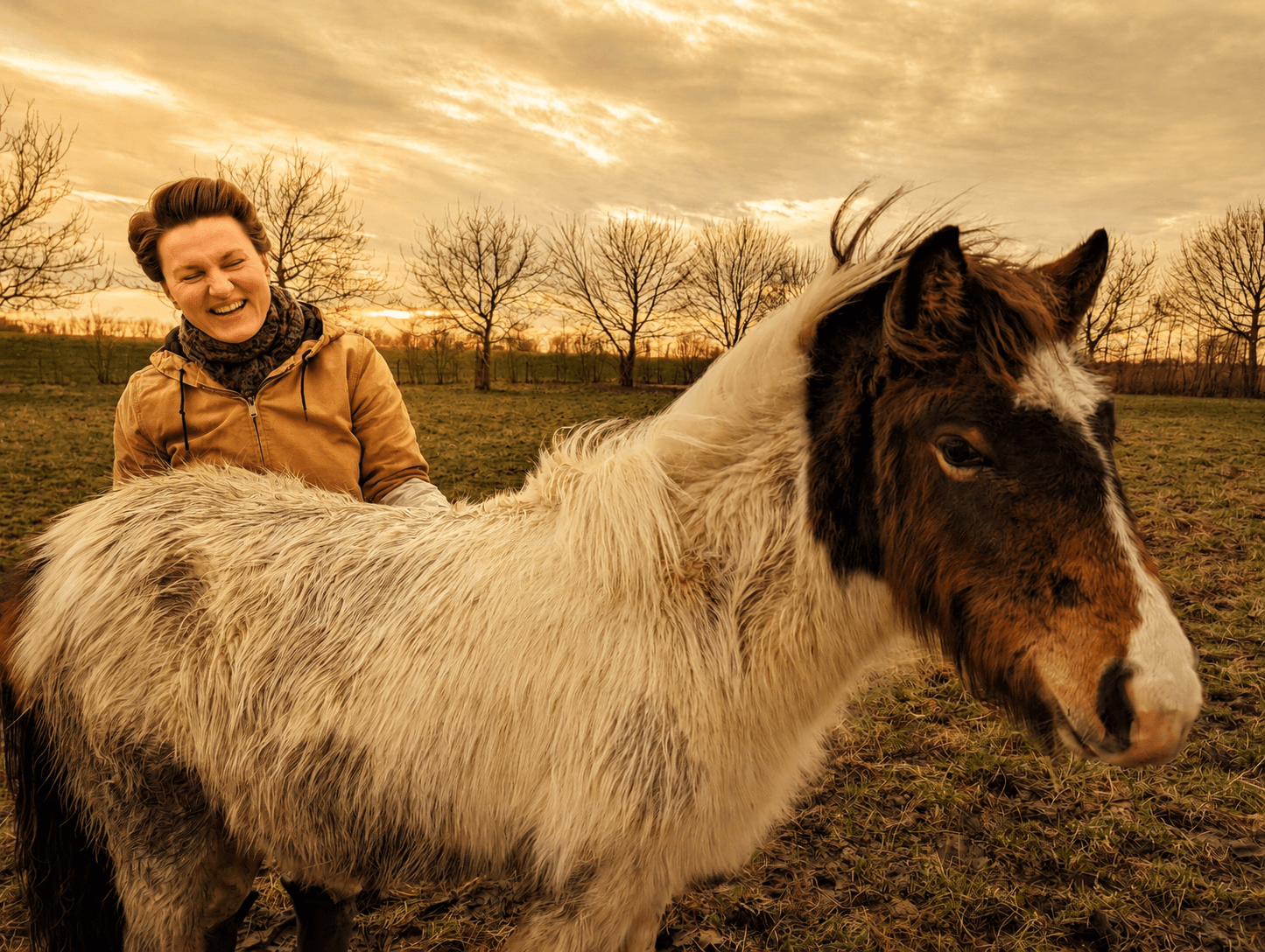
The photograph shows TINNA choosing to initiate and sustain the exchange.
 02
02Environment · Laminitis
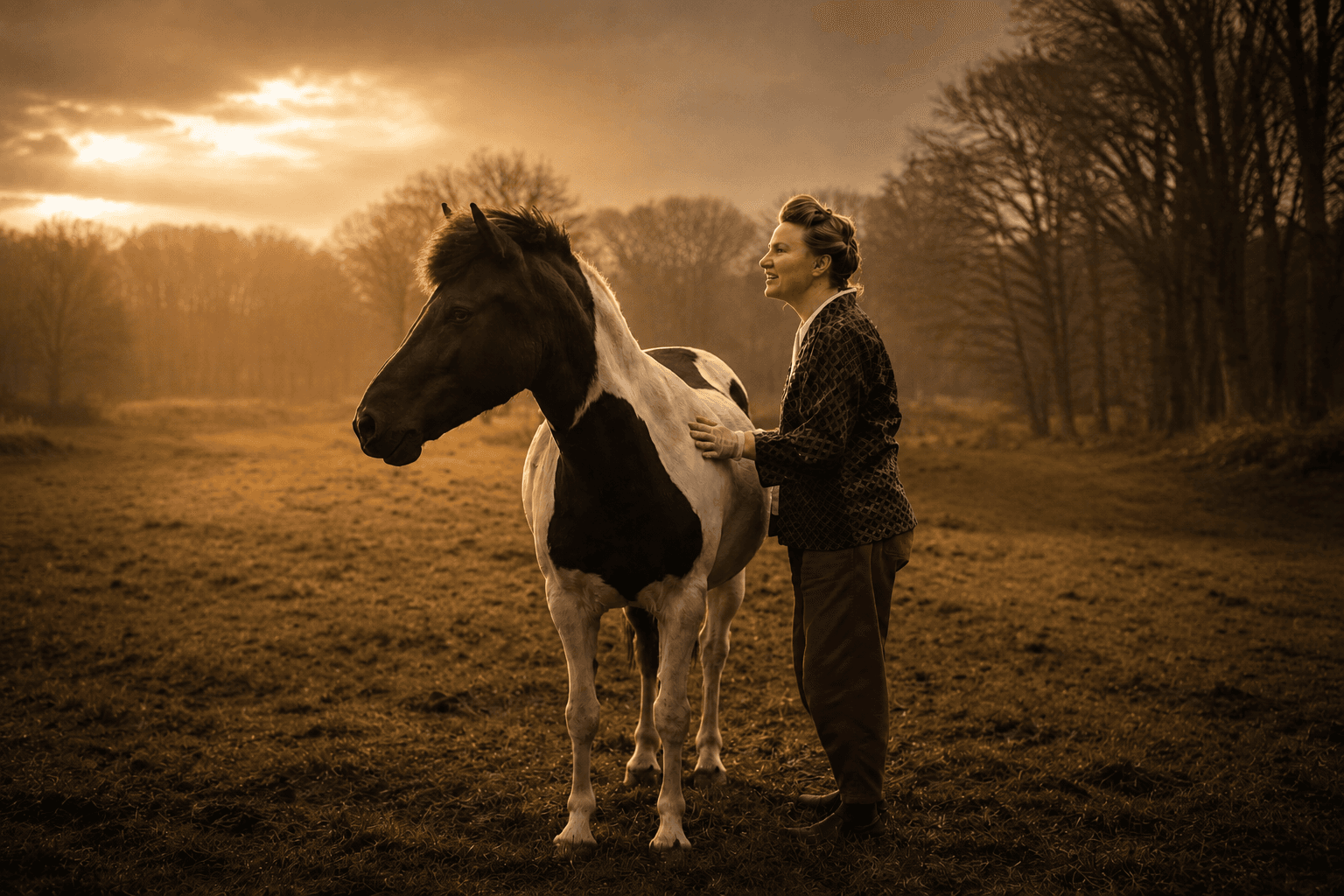
A horse with laminitis could barely stand or walk. We did not create a life in which she never needed to move. We placed water, hay and companionship within short, purposeful walking distances.
Following the changes described in this individual case, she was later observed running with the herd. This sequence does not establish what caused the change or predict an outcome for another horse.
Historical observation from the life of one of our own horses. It is not a treatment account, medical advice, or an example of a service outcome.
A human response to severe pain is often to place water, hay and bedding as close as possible, so the horse does not need to move. Our observations led us in a different direction.
Healthy horses visited the horse with laminitis in turns. They touched her with a foreleg, roused her and appeared to try to make her walk with them. Their repeated behaviour looked as if they recognised that remaining recumbent or standing in one place was not helping her.
We did not focus on removing every reason to move. Water and hay were placed where she could reach them after a short walk. Her bed remained where she could always see the other horses.
The herd gave her repeated reasons to rise. She appeared to want to remain with the other horses. That visible pull towards the herd became part of the environment around her.
As the days passed, she began to walk gradually over soft ground. The distance and frequency of her movement increased at her own pace.
Today she runs with the herd. The case changed our understanding of comfort: an environment designed to eliminate all effort may also remove movement, companionship and the reasons a horse has to rise.
What if the environment that looks most comfortable to a human removes the horse's reasons to stand?
This is a record from the life of one individual horse. It does not identify the cause of the illness, does not claim that our environmental changes caused recovery, is not a treatment procedure, and is not an invitation to reproduce it. It is not an outcome of an Equine Notion paid service, and similar results are not guaranteed.
 03
03Recovery · Colic
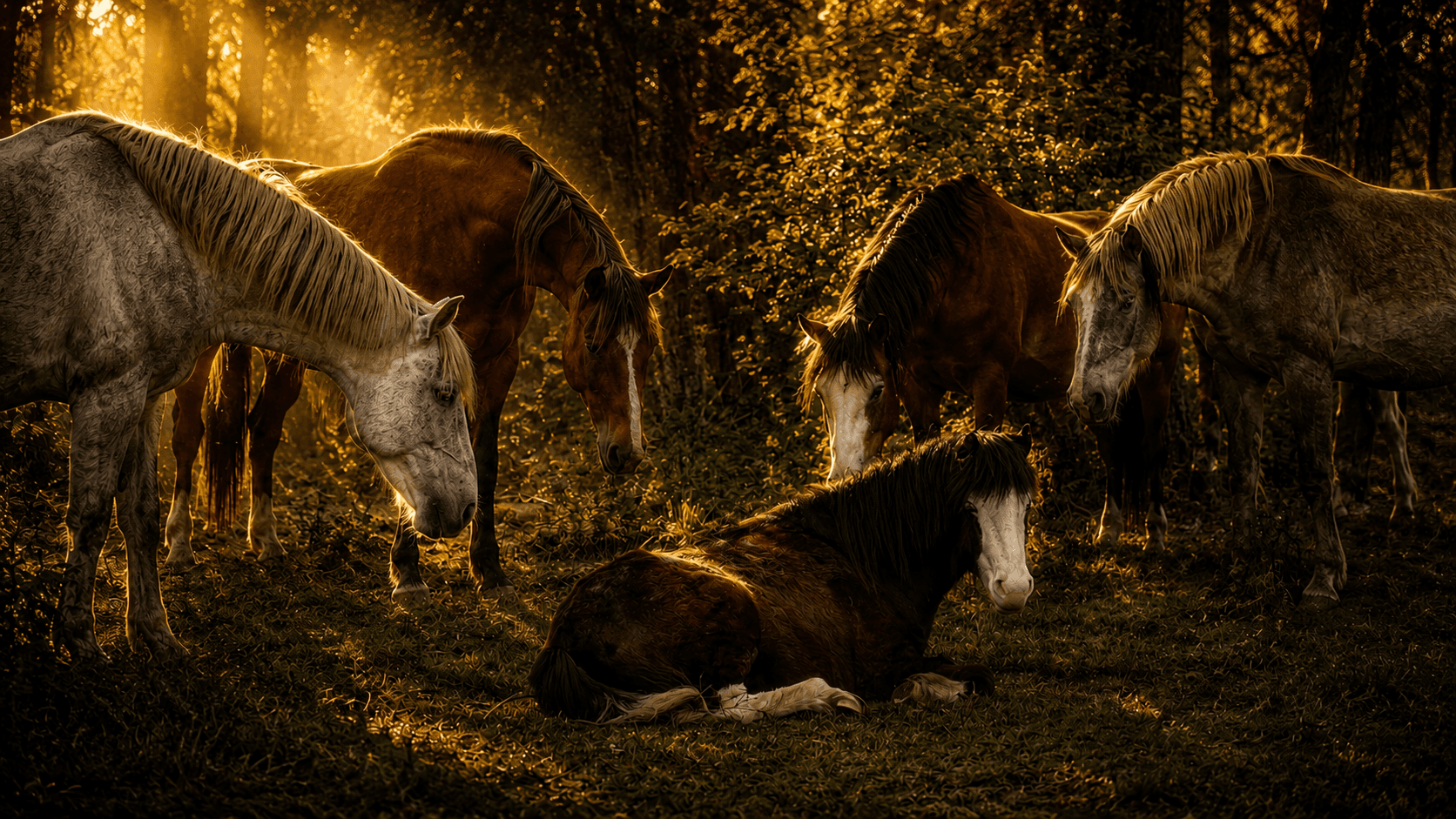
The colic began during the night. She rolled violently and was visibly worse the following day. After returning to the herd, she lay motionless, her lips and tongue appearing white. Then, with what appeared to be the last of her strength, she began rolling across the ground again.
She stood, entered the forest with her companions, sought water over her head and was eating tree bark the following day. She is alive and growing well today.
Historical observation from the life of one of our own horses. It is not a treatment account, medical advice, or an example of a service outcome.
The colic began during the night. She rolled violently and was visibly worse the following day. After returning to the herd, she lay motionless, her lips and tongue appearing white. Her body showed almost no visible vitality.
Then, with what appeared to be the last of her strength, she began rolling repeatedly across the ground.
Watching her, it looked as though she were using the movement to shift whatever was causing the pain inside her body.
That impression is not entirely separate from existing veterinary observation. The University of Kentucky notes that a horse with severe colic may lie on its back in an apparent attempt to relieve intestinal pressure. The University of Minnesota and the University Animal Hospital Zurich describe controlled rolling under general anaesthesia as a veterinary technique for repositioning the large colon in a specific diagnosed displacement.
A retrospective study of 142 horses with nephrosplenic entrapment—including seven Icelandic horses—also records that horses receiving conservative care were allowed to roll spontaneously. Many were treated without surgery, although the study did not establish that spontaneous rolling itself caused the displacement to resolve.
We could not see what was happening inside her body. We therefore cannot establish whether rolling altered the position of her intestine or caused the recovery that followed. What we could observe was the sequence of actions she initiated herself.
After rolling, she stood.
She did not remain where she had been lying. She began walking and then moved into the forest with the other horses. With her companions around her, she continued walking among the trees.
At the water place, she made the movement we knew as asking for water to be poured over her head. Water was poured over her, and she remained standing.
The following day, she was back in the forest. We observed her selecting and eating bark from the trees.
We cannot determine what each action did inside her body or attribute her recovery to one cause. Yet the complete sequence matters: from lying motionless, she began rolling, stood under her own power, followed the herd into the forest, walked with her companions, sought water over her head and, the next day, selected tree bark herself.
This was not passive recovery. It was a visible sequence of self-directed actions through which she appeared to participate in her own recovery.
This single experience cannot tell us what will happen in every case. Yet, as we watched her use the strength, movement, companionship, water and food available to her, we felt that we had come close to something fundamental in the nature of the horse.
She is alive and growing well today.
What can be observed when a horse who appears close to death begins choosing—movement, companionship, water and what to eat—for herself?
This is a record of what occurred in one individual case. The cited veterinary sources explain general veterinary findings concerning body position, rolling, intestinal pressure, and certain diagnosed displacements. They do not establish this horse's intention, prove that her spontaneous rolling caused her recovery, or provide a procedure for another horse. This account is not veterinary advice, a treatment instruction, or a prediction of another horse's outcome. It is not an outcome of an Equine Notion paid service, and similar results are not guaranteed.
 04
04Choice · Free-choice feeding
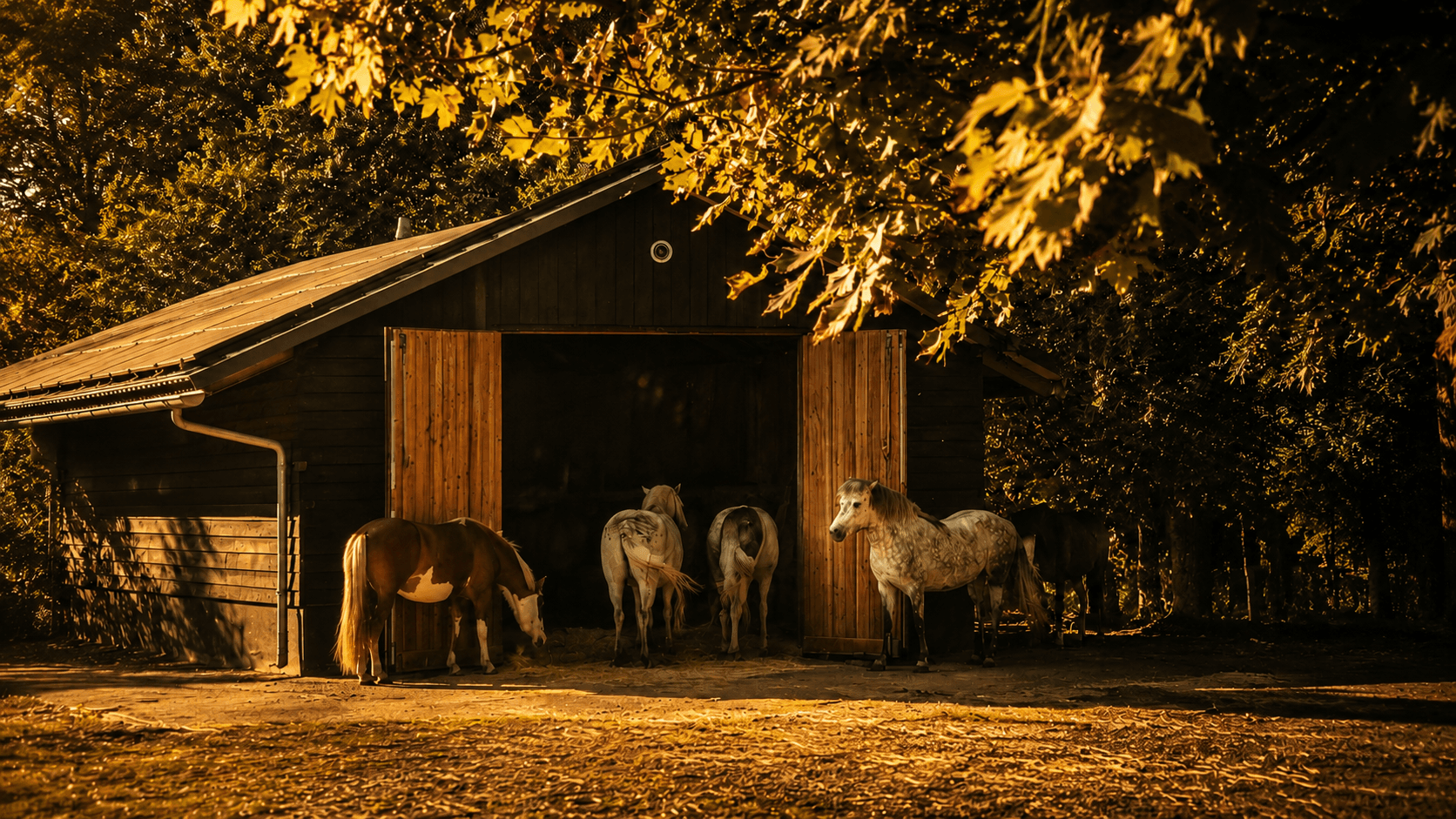
Horses living in the same place do not eat the same amount, at the same speed or in the same way. Our nine horses can choose when and how much hay to eat.
We watch the horse's daily vitality—not whether every body matches one human standard.
Many owners calculate a fixed daily amount of hay from body weight. Yet horses sharing the same environment visibly differ: some eat a great deal, some eat little, some chew slowly, and others eat quickly.
Their needs and naturally healthy body shapes are not identical. We therefore look beyond the food, the quantity, the speed of eating and the outline of the body to a more direct question: is this horse consistently energetic and well in daily life?
A horse may eat a large amount of hay and be visibly fat while remaining active and healthy every day. In that observed situation, the amount may suit that individual horse even when the body does not match a standard chart.
Our horses choose when and how much to eat. When they feel unwell, we have observed them enter the forest, eat bark and lick mud without being directed by us.
Our own part is observation. We watch each horse's daily vitality, appetite, behaviour and movement continuously, together with the choices each horse makes around food.
This is not an absence of observation. It replaces control by a predetermined quantity with continuous attention to vitality, behaviour, appetite, movement and the choices of each horse.
Is the horse healthy—or merely the shape a human has decided is correct?
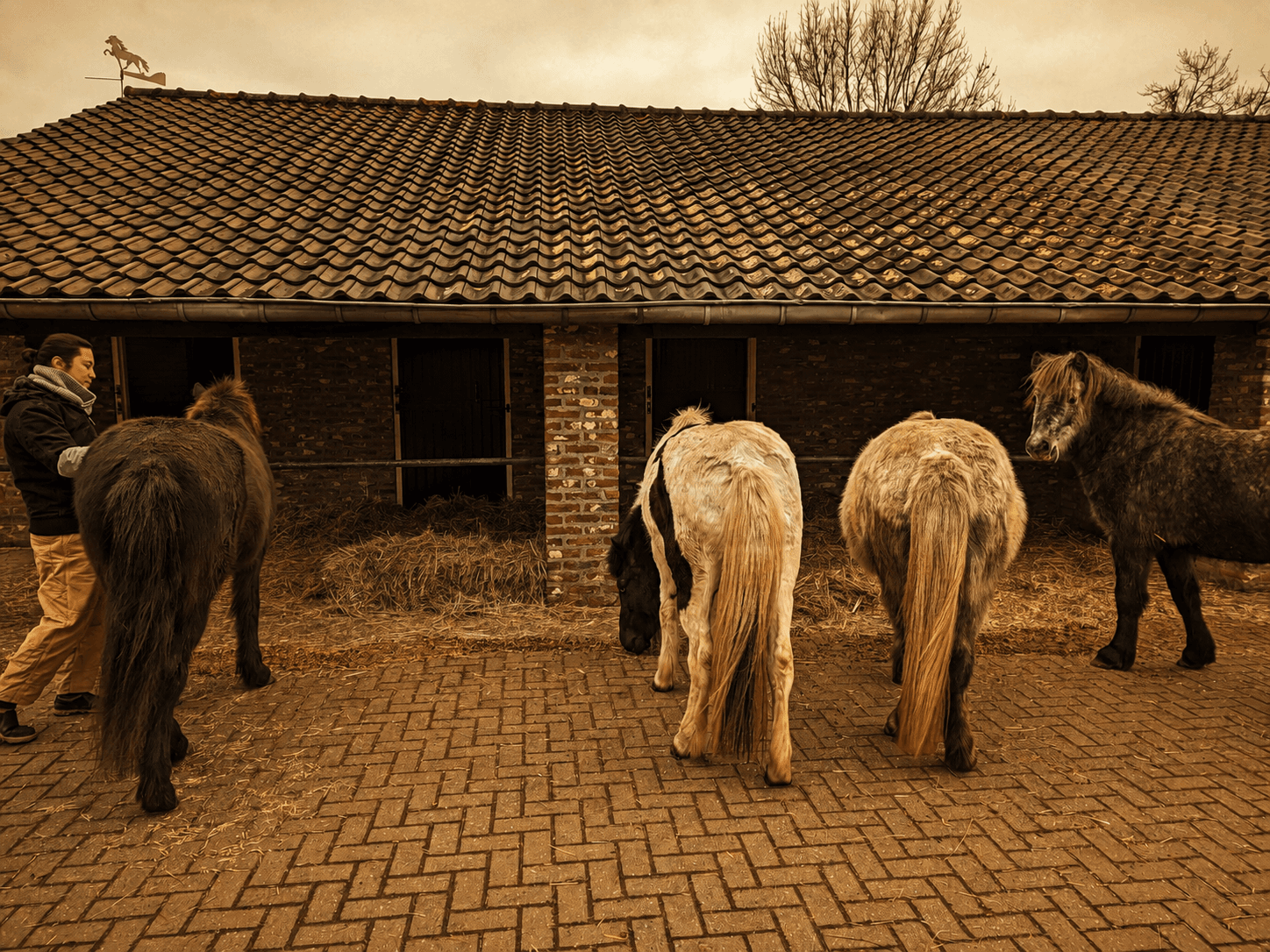
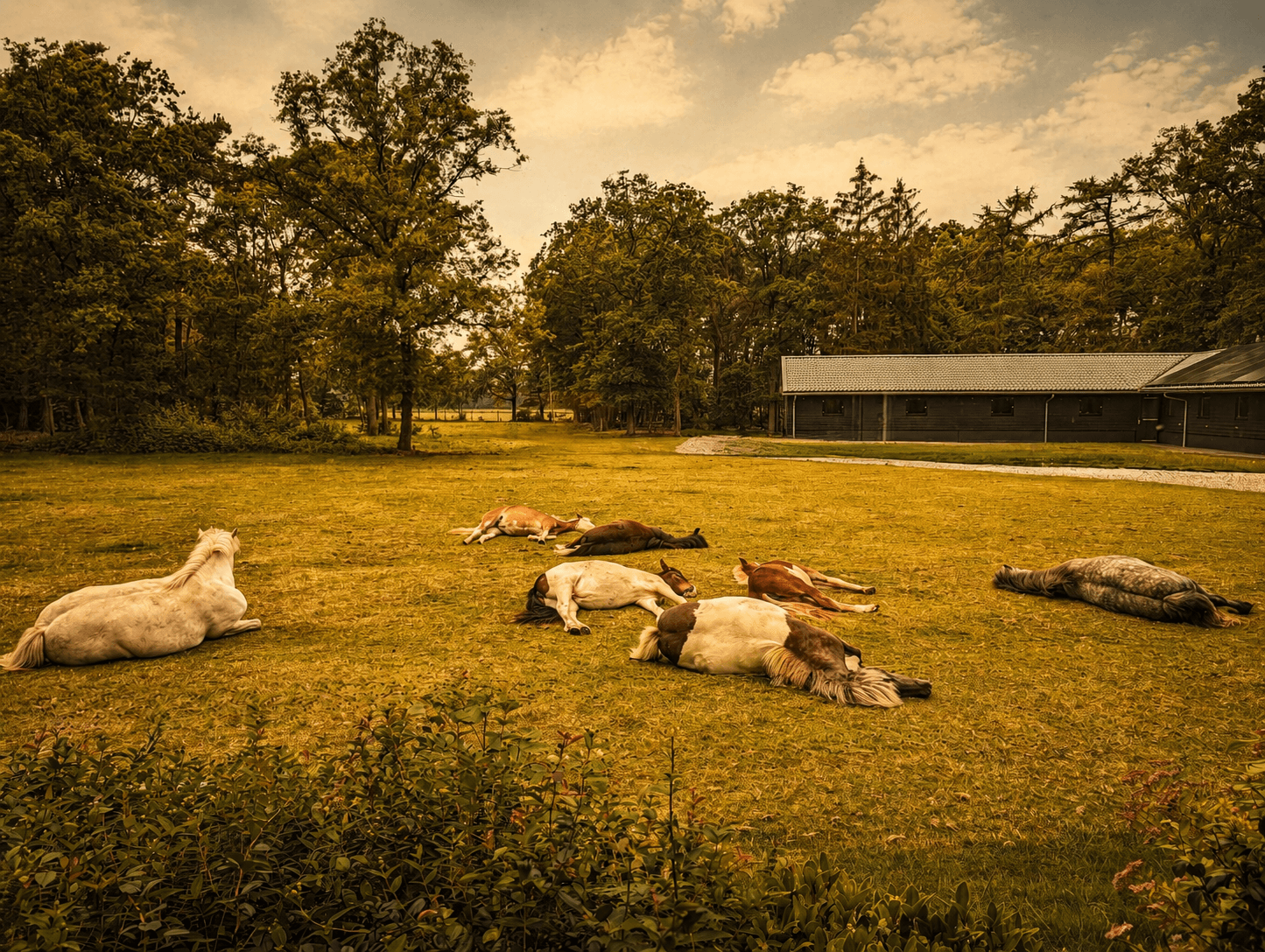
The photograph shows the herd gathered at the open barn, where each horse comes and goes at its own rhythm.
 05
05Relationship · Fidla & Tinna
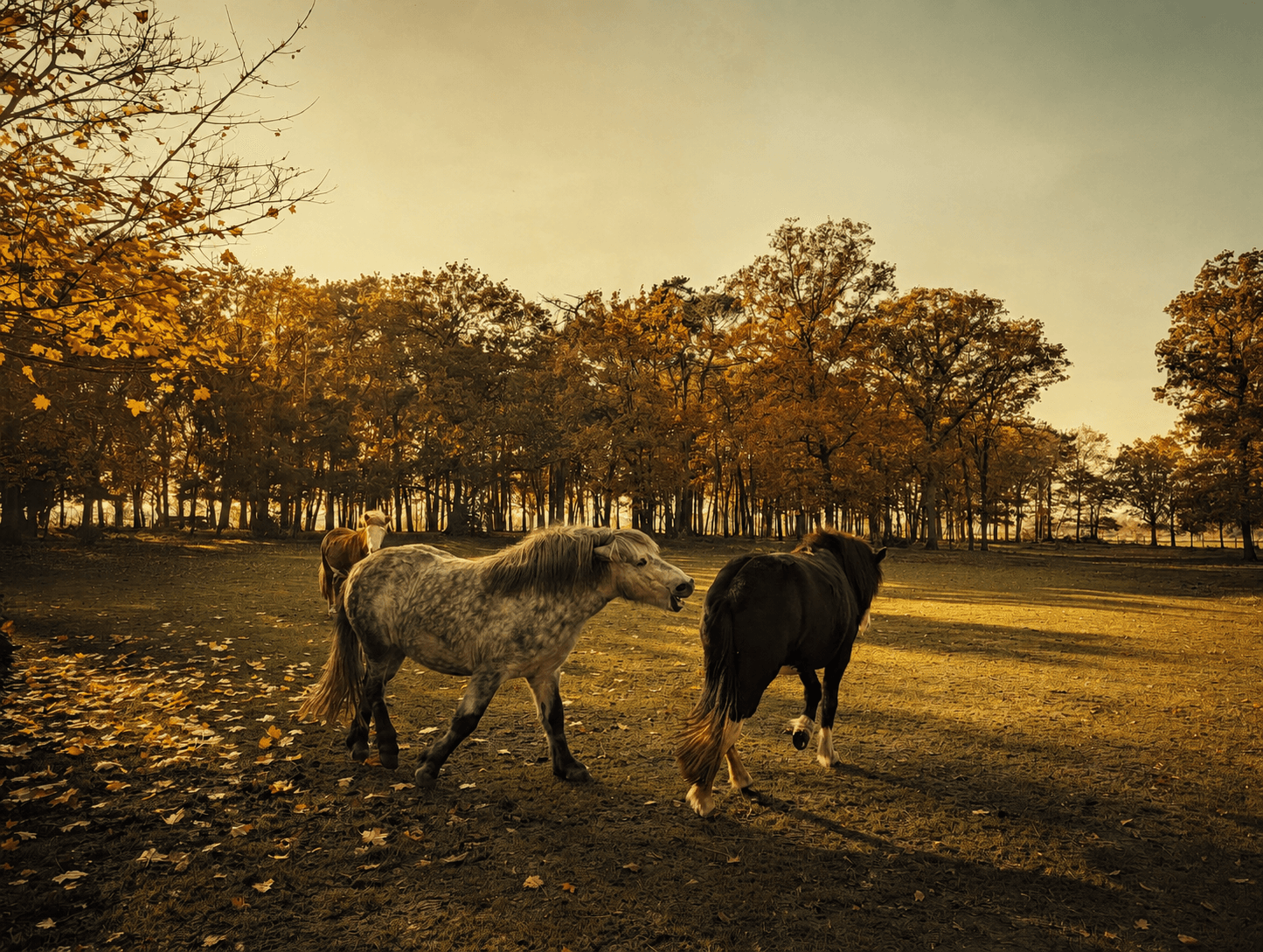
When FIDLA first came to us, she fled from approaching humans, and there was biting and kicking. TINNA guarded her feed and drove other horses away — and she could bite and kick with real force. We did not suppress their behaviour through training or pressure.
We kept our distance at first, shared the same pasture and daily life, and protected each horse's ability to reach feed by her own choice. Over time, wariness and defensive behaviour gradually faded. Today FIDLA and TINNA live quietly together.
FIDLA was one of the horses who came to us with a history we did not make. At first, she moved away whenever a person came close. She also bit and kicked, and the biting and kicking were not symbolic — they were real.
TINNA is a different shape of the same seriousness. She guarded her feed and would drive other horses away from it. She too had very strong biting and kicking behaviour. Neither of them was, in our eyes, a problem to be corrected from the outside.
We did not train the behaviour down and we did not use pressure to suppress it. There was no pressure-and-release obedience work. At first, we simply kept a distance — close enough to share the day, far enough that neither horse had to defend herself against us.
They lived in the same pasture as we did. We picked the droppings, moved through the herd, and shared the ordinary routines of the day. Throughout, we protected a simple condition: each horse could reach water, feed and her place in the group by her own choice.
Within that repeated, non-coercive daily life, something slowly changed. The situations that had called for defence became rarer. The distance we kept could become smaller — always gradually, always with safety, never forced.
Today FIDLA and TINNA live gently together. We did not make them quiet. What formed was a relationship and a set of living conditions in which they could be quiet. Stopping a behaviour and the conditions that made the behaviour necessary are not the same thing.
What changes when a horse no longer needs the behaviour she was using?
This is a record of two individual horses in one life, ours. It does not claim that biting or kicking has one cause, that this way of living will produce the same result for another horse, or that any horse can be made safe by copying it. It is not a method, a treatment, or a promise.
 06
06Choice · Before ownership
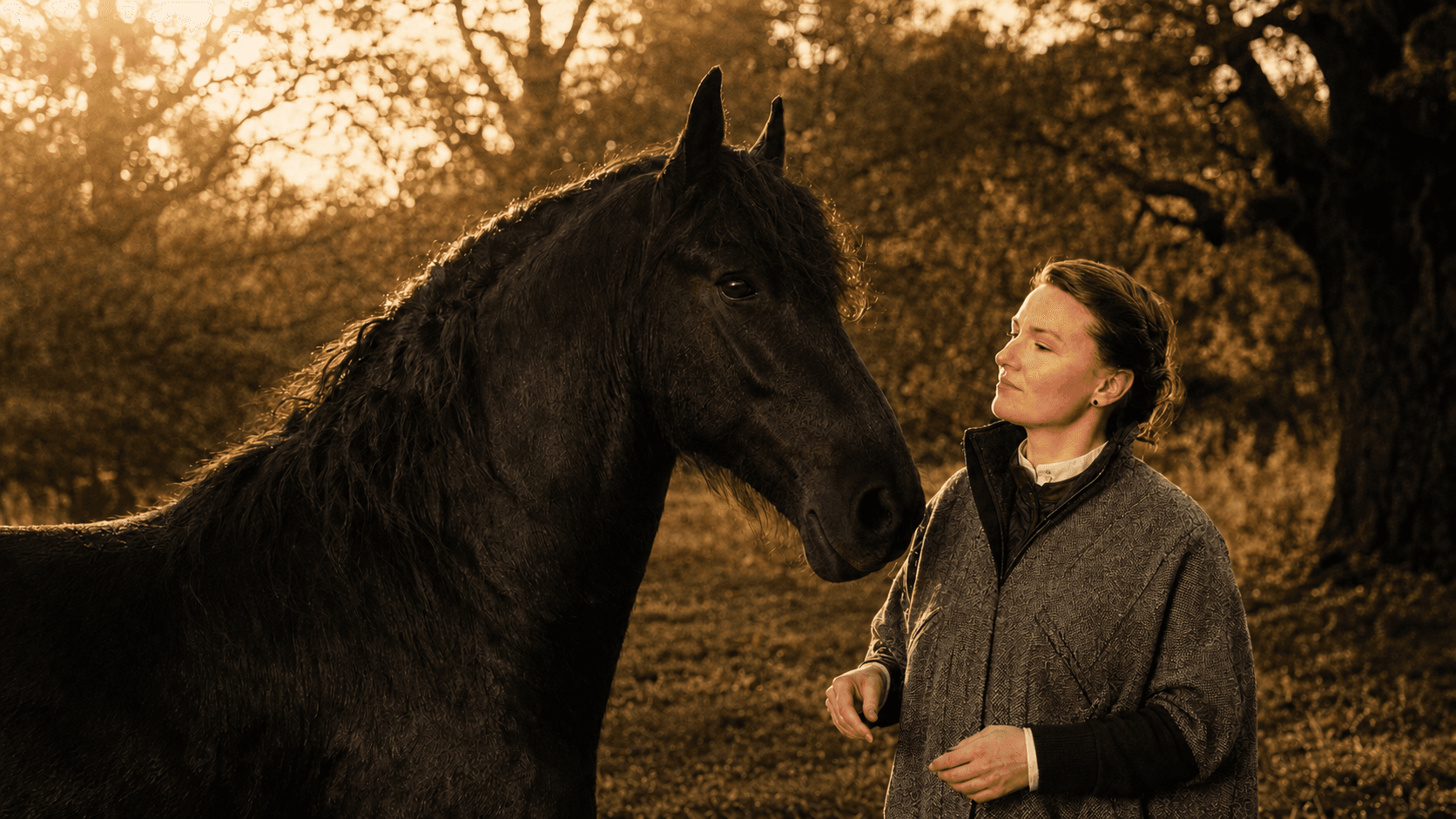
Our first horse was a five-year-old Friesian stallion. We chose the horse first and tried to make a workable life around him afterwards. The boarding system, his history and the life we wanted did not fit.
The mistake was not simply choosing a stallion. It was choosing a horse before knowing whether we could make his life work.
Our first horse was a five-year-old Friesian stallion. At the time we had neither enough experience with horses nor land of our own, and people around us advised us to reconsider the purchase. We chose the horse first, and only afterwards began looking for a life that could hold him.
Few boarding stables would accept a stallion. The system we found assumed riders and driving horses: limited hours and space outdoors, and no pasture large enough for a horse to truly run. We ourselves did not ride. We moved between several stables, and the life we could offer never grew to match the horse.
In spring his handling became difficult. I was dragged, kicked and injured. After several months, we returned him to the stable from which we had bought him.
The lesson was not about his character, and not only about choosing a stallion. It was about order: we chose a horse and then tried to arrange a life around him, when the life we could actually provide needed to be considered first.
The mistake was not simply that we chose a stallion. Before choosing a horse, we had not connected the life we wanted with his history, sex, breed, experience and daily routines—and with the land, herd, movement, facilities, safety and time we could actually provide.
This case is where Coexistence Design begins: designing a horse's whole life—his history, herd, land and daily rhythm—before the horse himself is chosen.
The first question is not which horse you want. It is what kind of life you can truly offer.
This record concerns our own first horse. It is not a recommendation for or against any breed, sex or age of horse.
From the Field
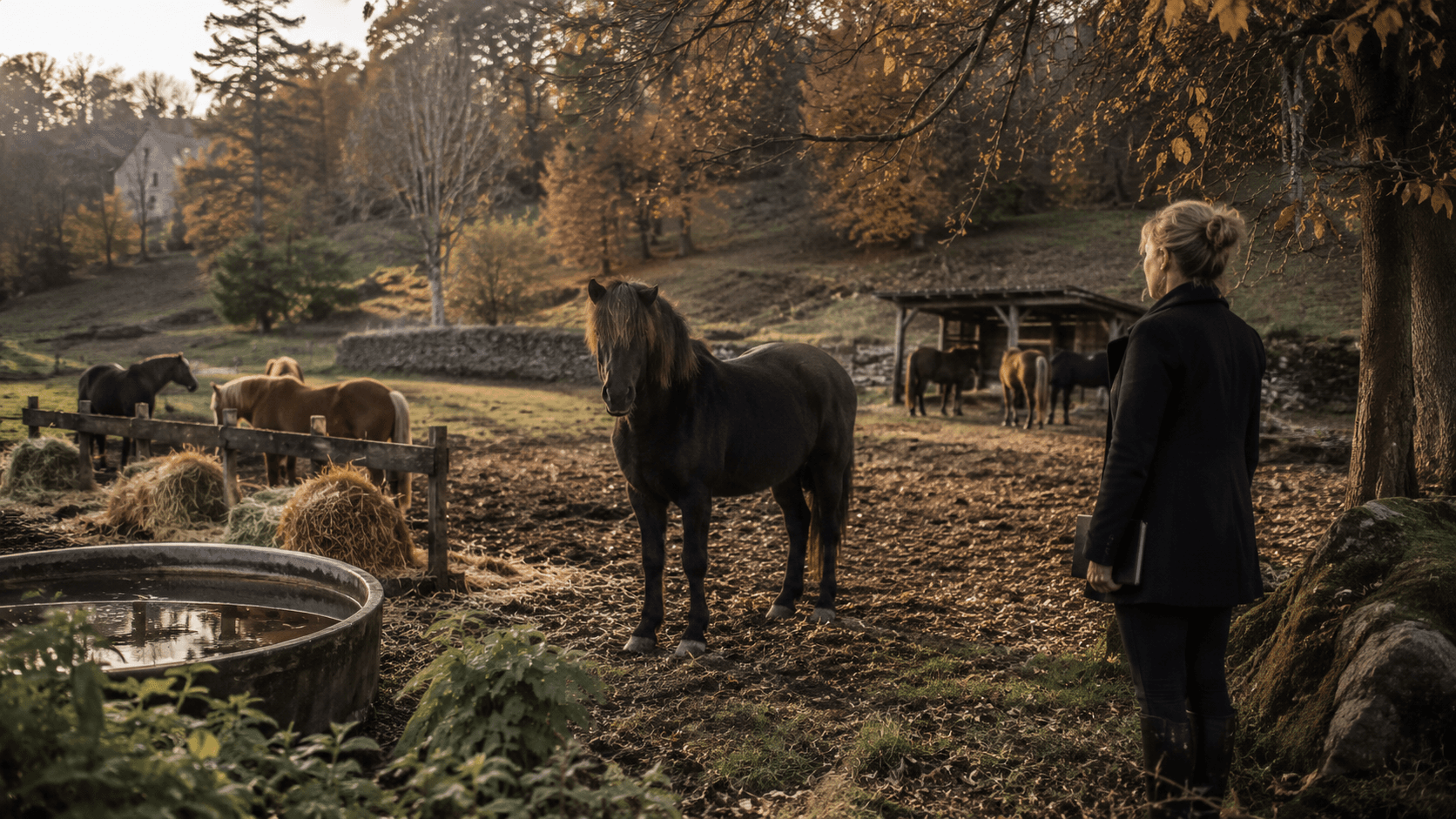
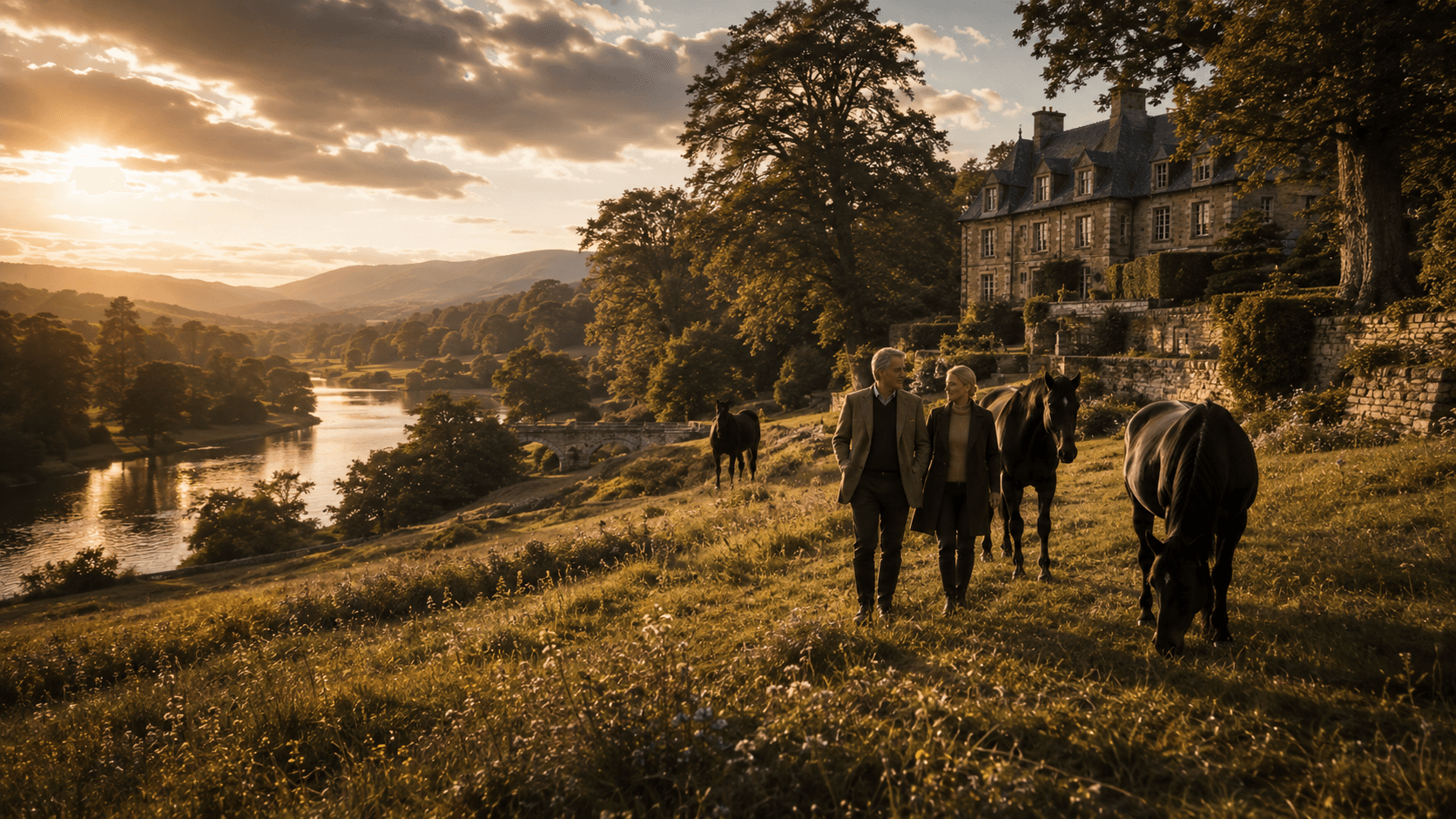
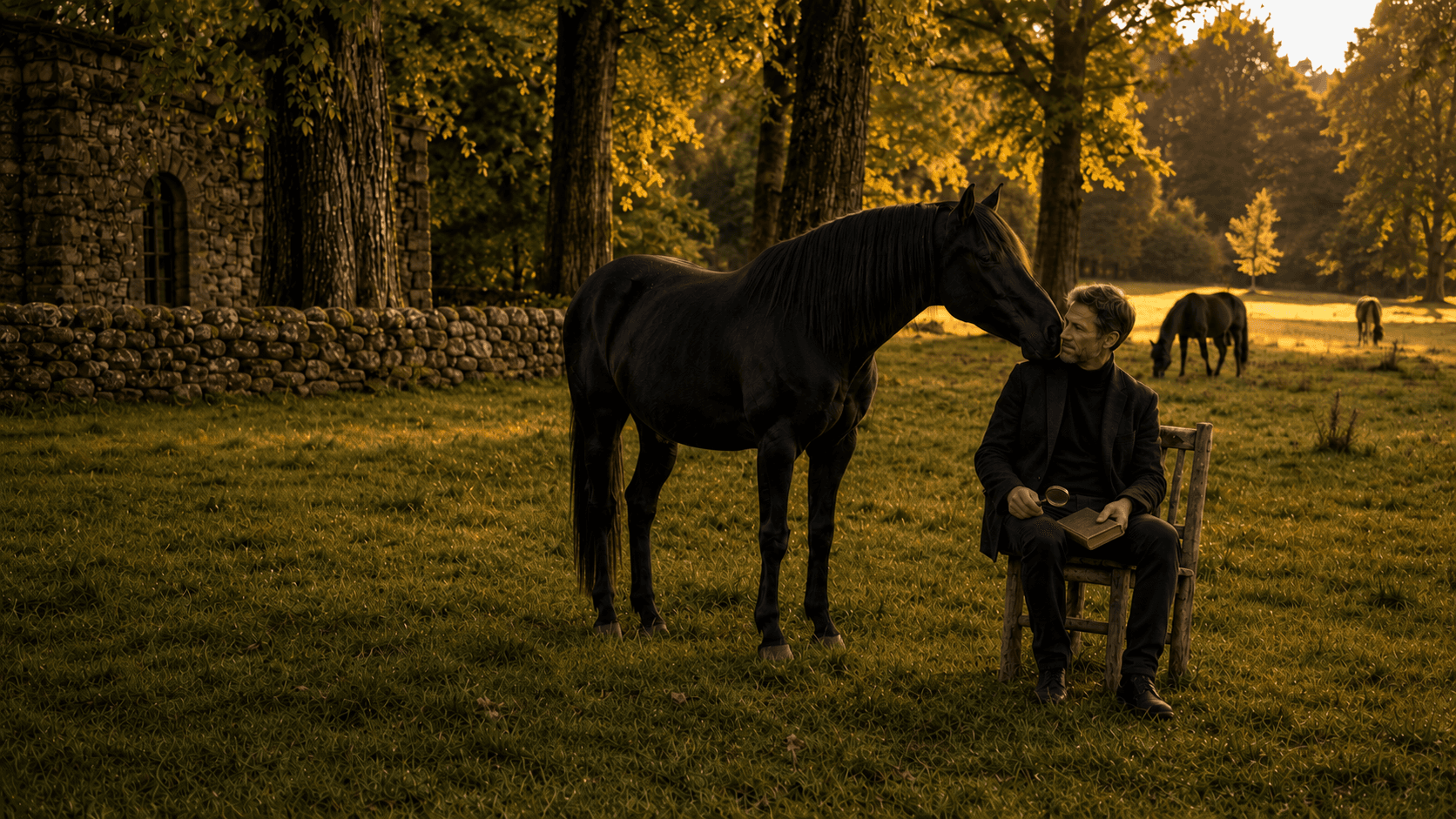
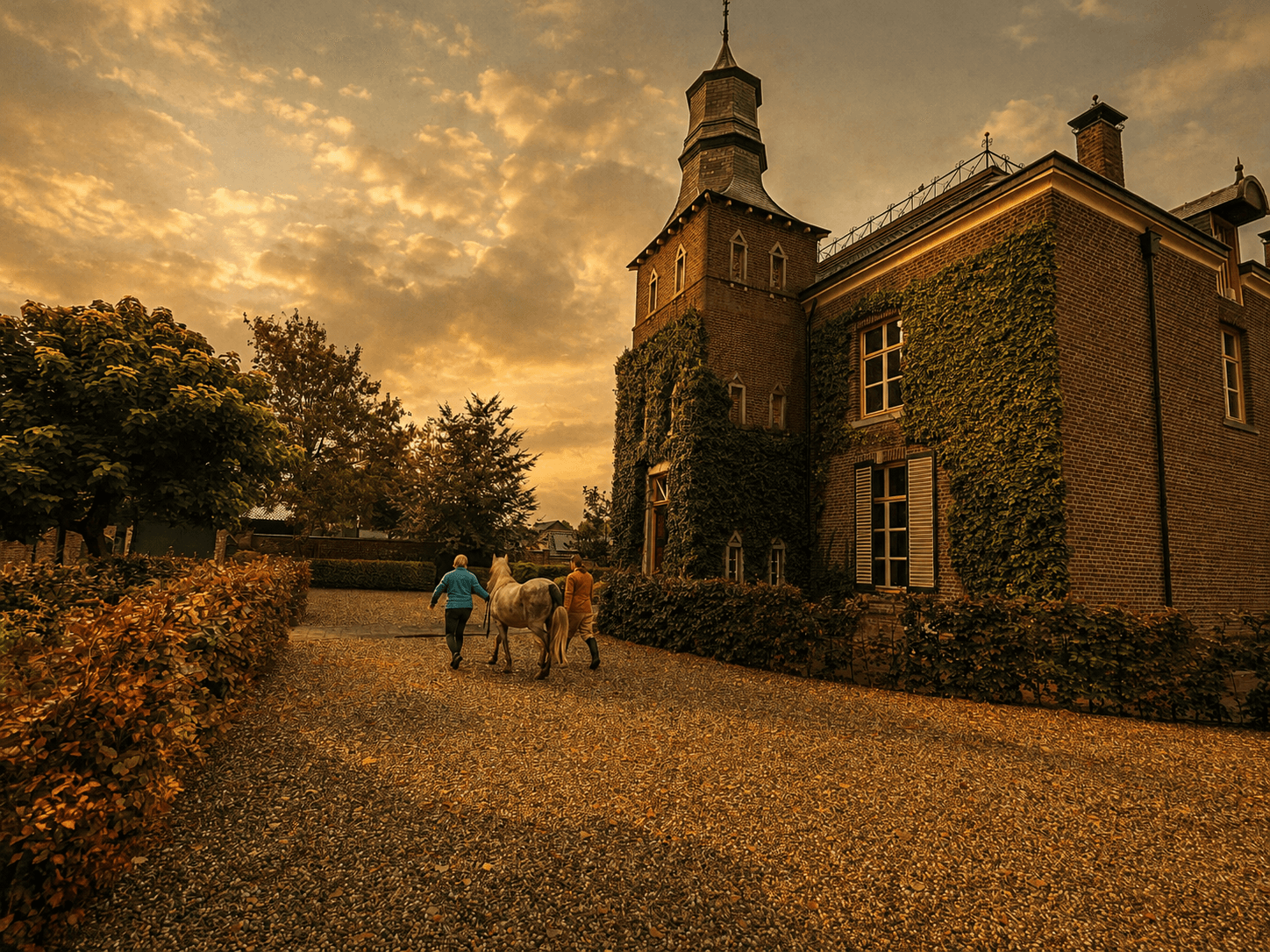
Daily life and landscape from our observation site in Markelo.
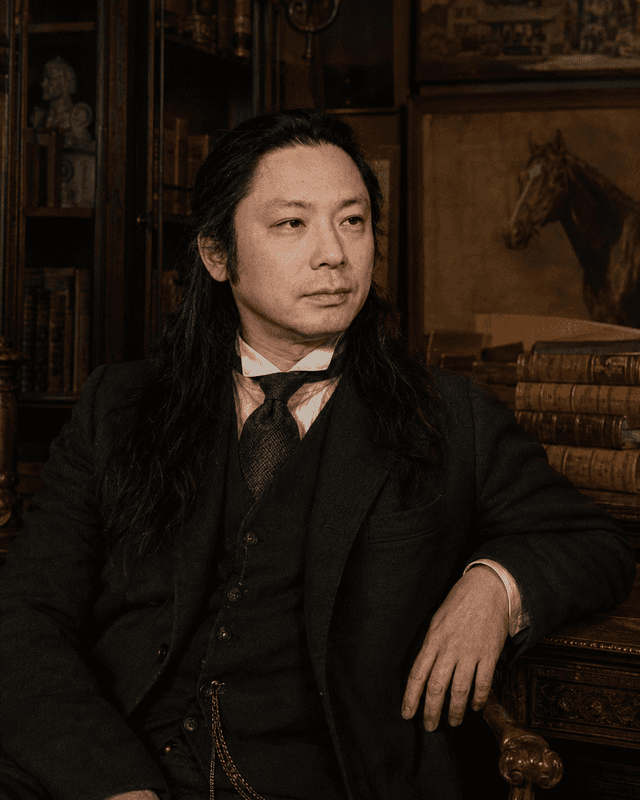
Founder · Philosopher · Principal Advisor
Known to clients as Master NONAKA, he leads Equine Notion through relationship advisory, field observation, and long-form private consulting work.
About Nobuyuki →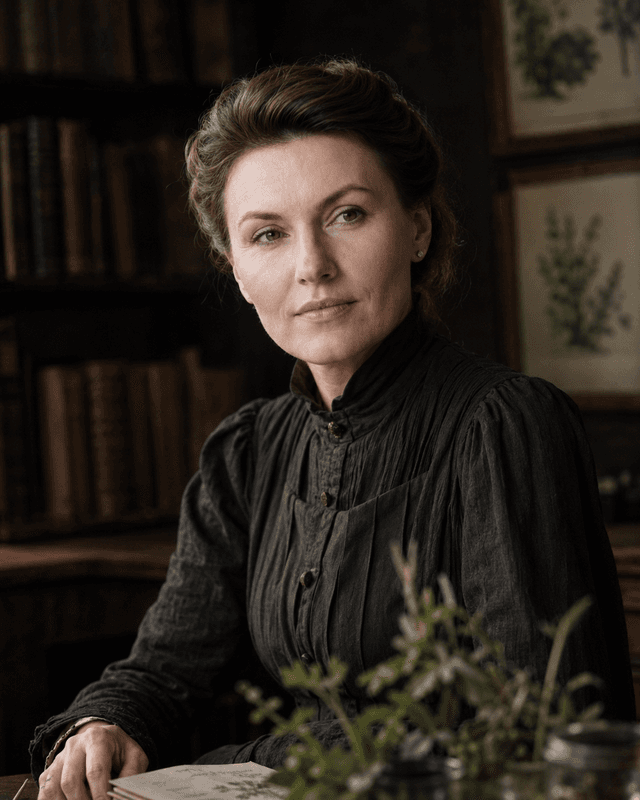
Co-Founder · Field Observer · Client Experience
Tetiana shapes the client journey, visual world, and daily observation process that keeps Equine Notion grounded in lived reality.
About Tetiana →Guidance begins from the relationship you already have.
For people who want depth, discretion, and clear next steps.
Not theory alone: our work is shaped by lived observation.
A small reason to return, observe, and reconnect each day.
Understand your horse's mind, body, emotions, and timing.
Personalised recommendations you can apply.
Strengthen trust and communication together.
Support awareness, comfort, and daily rhythm.
Guidance that evolves with you and your horse.
Build a bond that endures through every season of life.
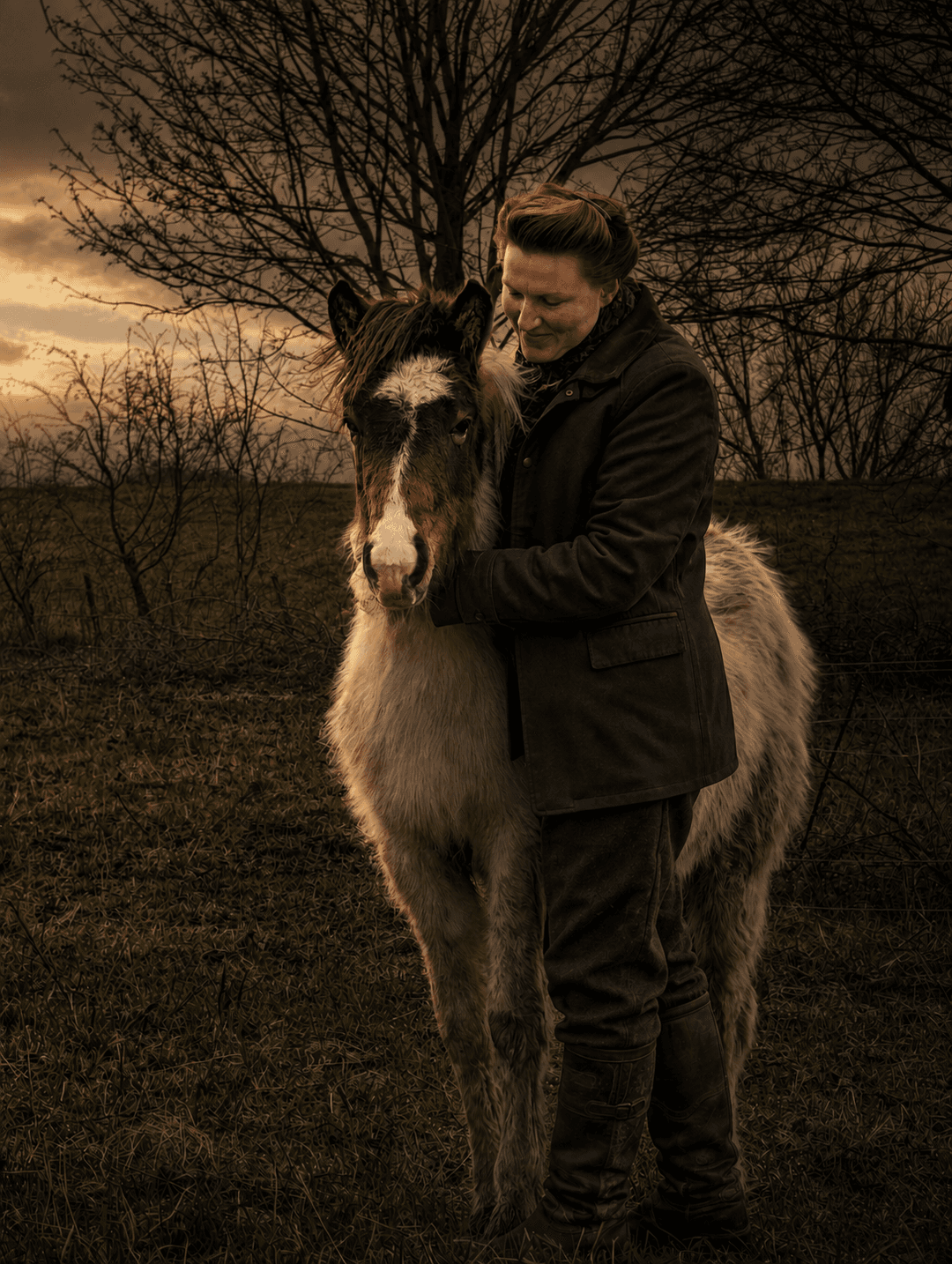
Our two pillars
Advisory & analysis
In-depth advisory work examines your horse’s behavioural patterns, daily living conditions, sensitivities, and needs. You receive a detailed written analysis and a private consultation.
Explore our services →Our two pillars
Guidance & integration
Personalised approaches for daily management, feeding arrangements, environment, herd life, and the relationship between horse and human.
Explore the method →
OUR STARTING POINT
Our work begins with the horse’s own capacity to regulate, adapt, and recover. Rather than treating the horse as a problem to be corrected from the outside, we examine the conditions surrounding the horse: movement, forage access, herd life, environment, daily rhythms, and human involvement.
Within our own herd, this approach was developed without making veterinary intervention the centre of care. Equine Notion shares observations, lived experience, and approaches to daily living conditions. It does not diagnose disease, prescribe treatment, claim to cure a horse, or instruct an owner either to seek or refuse veterinary care. Decisions concerning veterinary care remain with the owner.
We combine modern research with time-tested wisdom.
We consider the whole horse in context — mind, body, and environment.
Every client is unique. All work is confidential and one-to-one.
We work with horse owners across disciplines and cultures.
We care deeply about the horses and the people who love them.
Begin where the relationship already is
Send us an inquiry and let us explore how we can support you and your horse on your unique journey together.
FOLLOW THE WORK
Follow our published observations, field notes, and reflections on life with horses.
Curated by Tetiana V. NONAKA
Visual field notes, observations, and moments from daily life with our horses.
Long-form reflections on observation, human–horse relationships, and the thinking behind Equine Notion.